Using Machine Learning to Tame the Noise: Transforming SOC Alert Management

In today's hyper-connected, telemetry-saturated world, Security Operations Centers (SOCs) face the daunting challenge of managing overwhelming volumes of alerts. These alerts, while intended to enhance visibility and incident response, often become a source of operational bottleneck. With thousands — sometimes tens of thousands — of alerts generated daily, distinguishing meaningful signals from noise is no longer a human-scale problem.
This is where Machine Learning (ML) becomes not just a helpful tool, but a necessary evolution. Unlike traditional rule-based systems, which are static and brittle, ML algorithms are dynamic, adaptive, and capable of learning from historical patterns. They can identify correlations, group redundant signals, and prioritize threats with precision that improves over time.
ML algorithms can process thousands of alerts simultaneously, identifying patterns invisible to human analysts
In this comprehensive article, we will examine the application of ML in reducing alert noise in SOC environments. We'll delve into the types of models used, explore how alert classification and clustering work, analyze the role of enrichment and correlation, and examine how ML integrates with broader SIEM and SOAR systems.
Why Traditional Filtering Fails
Traditional alert processing relies heavily on static rules. These rules are manually defined and based on predictable patterns: if X happens, trigger Y. While effective in simple, consistent environments, this logic quickly collapses under dynamic conditions. Cloud environments, BYOD policies, containerized applications, and microservices architectures all introduce layers of unpredictability that static filters cannot keep up with.
Moreover, static rules require constant tuning. New systems mean new rules. Changes in behavior patterns — like a new login location due to remote work — require exception handling. Eventually, rules become outdated, misaligned with business logic, and prone to either suppressing true positives or flagging benign behavior as malicious.
- Static rules become outdated as environments evolve
- Manual tuning is time-intensive and error-prone
- False positives increase as business patterns change
- True threats can be suppressed by overly broad filters
- Rule complexity grows exponentially with system diversity
In contrast, machine learning models adapt. They learn from data, not from hard-coded assumptions. They evolve with the environment and improve as they see more examples. This is the foundation of their power in security operations.
Classification Models: Learning What Matters
At the heart of many ML applications in alert processing is classification — the task of categorizing an alert into one of several predefined classes, such as 'benign,' 'suspicious,' or 'malicious.'
Supervised Learning
In supervised classification, models are trained on labeled datasets where each alert has been reviewed and categorized by a human analyst. These models learn to associate features of the alert (such as source IP, destination port, alert signature, time of day, etc.) with their corresponding categories.
- Decision Trees - Easy to interpret and explain to analysts
- Random Forests - Robust against overfitting with ensemble learning
- Support Vector Machines (SVM) - Effective for high-dimensional data
- Gradient Boosting Models (XGBoost, LightGBM) - High accuracy with structured data
- Deep Neural Networks - Complex pattern recognition capabilities
The quality of these models depends heavily on the dataset — both in terms of size and labeling accuracy. Once trained, however, they can classify new, unseen alerts in milliseconds, drastically reducing triage time.
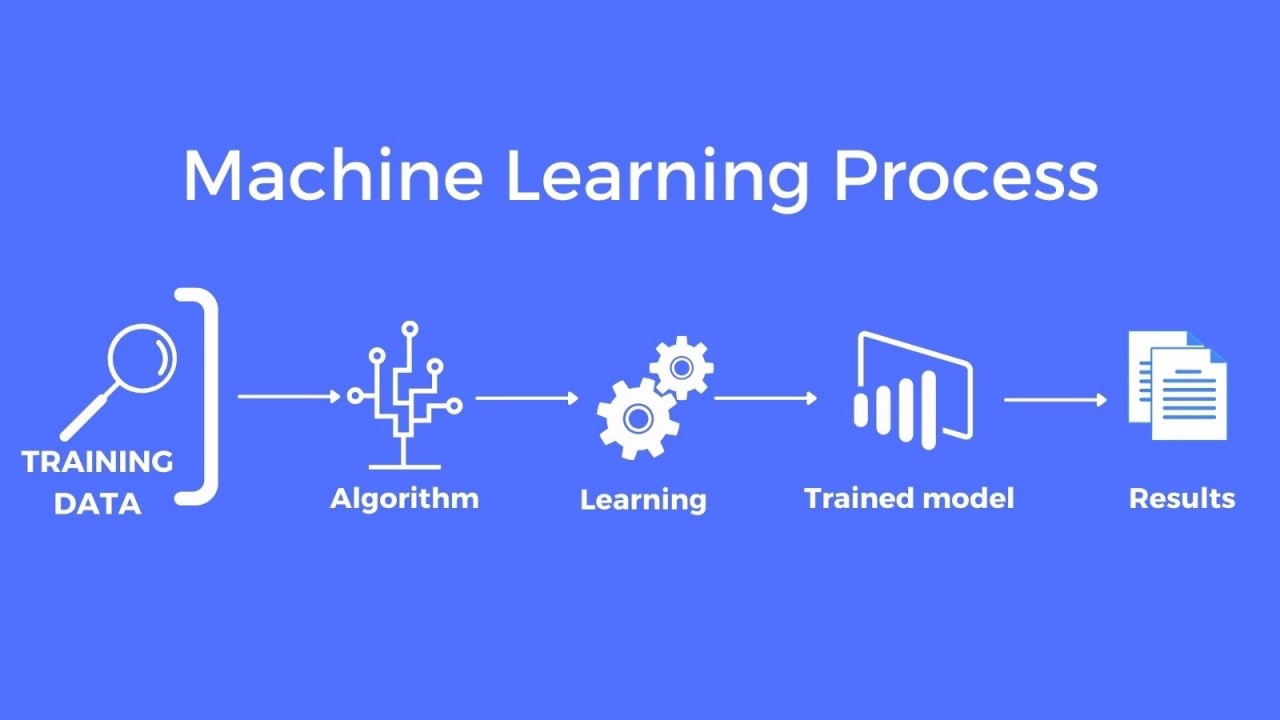
Supervised learning models train on historical alert data to learn classification patterns
Unsupervised Learning
In many cases, labeled data is scarce or inconsistent. This is where unsupervised learning becomes valuable. These models look for intrinsic structure in the data without predefined labels. Clustering algorithms such as K-means, DBSCAN, and hierarchical clustering can group similar alerts together, helping analysts identify patterns, detect campaigns, or highlight outliers that warrant closer inspection.
Unsupervised models are especially useful for anomaly detection, where rare or unusual events can indicate potential threats that would otherwise be missed by signature-based systems.
Clustering and Grouping Alerts at Scale
Alert clustering is one of the most practical uses of ML in SOCs. Rather than treating each alert as an isolated event, clustering algorithms analyze relationships between alerts across time, systems, and detection mechanisms.
Consider a case where 500 alerts are generated across a network in five minutes. If analyzed in isolation, this might seem like noise. But clustering may reveal that these alerts share the same source IP, similar payloads, or synchronized timing — indicating a coordinated scan or attack attempt.
# Example of alert clustering using scikit-learn
from sklearn.cluster import DBSCAN
from sklearn.preprocessing import StandardScaler
import numpy as np

# Feature extraction from alerts
features = np.array([
    [alert.source_ip_int, alert.dest_port, alert.timestamp_hour],
    # ... more alert features
])

# Normalize features
scaler = StandardScaler()
features_scaled = scaler.fit_transform(features)

# Apply DBSCAN clustering
clustering = DBSCAN(eps=0.5, min_samples=5)
cluster_labels = clustering.fit_predict(features_scaled)

# Group alerts by cluster
for cluster_id in set(cluster_labels):
    if cluster_id != -1:  # -1 indicates noise/outliers
        cluster_alerts = alerts[cluster_labels == cluster_id]
        print(f"Cluster {cluster_id}: {len(cluster_alerts)} related alerts")
Advanced clustering techniques, such as density-based methods or vector embeddings (using NLP models like BERT), enable more nuanced groupings. For example, alerts can be clustered based on log message similarity, encoded into high-dimensional vectors, and compared using cosine similarity.
Enrichment: Adding Meaning to Machine Output
Machine learning's effectiveness is magnified when it is paired with enrichment — the process of supplementing raw alert data with additional context from both internal and external sources.
Internal Enrichment
- Asset criticality (is this a production server or a dev box?)
- User identity and behavior (is this a known admin or an intern?)
- Historical behavior baselines (has this event occurred before?)
- Existing incident tickets or change requests
- Network topology and segmentation information
This helps the model understand what is normal for a given entity and what deviates from expected patterns.
External Enrichment
- Threat intelligence feeds (IP reputation, malware indicators)
- Vulnerability databases (CVEs, known exploits)
- Industry benchmarks and MITRE ATT&CK mappings
- Geolocation and ISP information
- Domain reputation and WHOIS data
With enrichment, ML models can go beyond simple statistical outliers to identify truly relevant alerts. A login from an unknown country may be benign — unless it targets a high-value system and coincides with known malicious IP ranges.
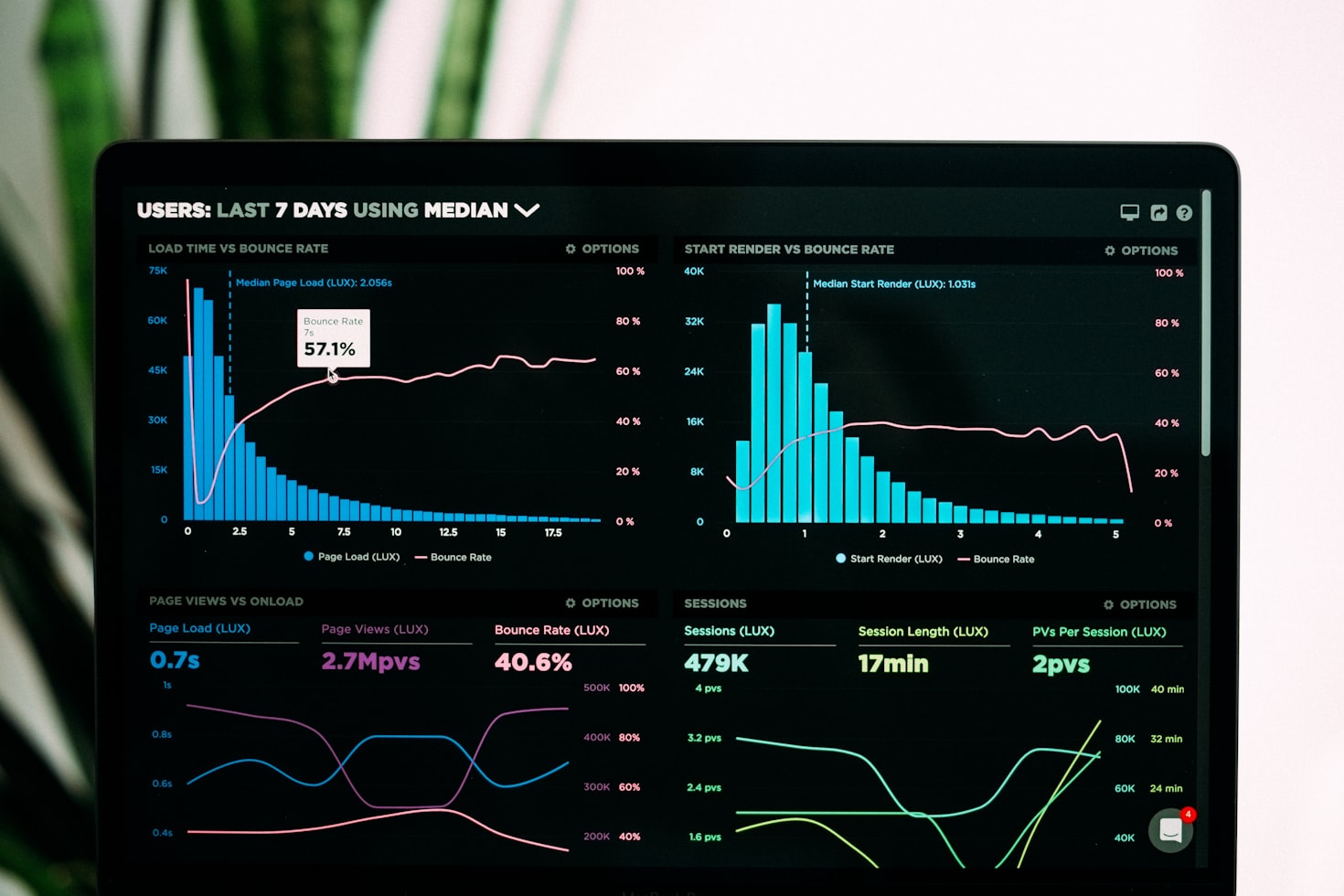
Enrichment adds crucial context that transforms raw alerts into actionable intelligence
Correlation: Connecting the Dots Across Systems
Correlation is the glue that binds individual alerts into meaningful incidents. ML-based correlation engines analyze temporal, spatial, and semantic relationships between events to determine whether they are part of a larger attack chain.
- Mapping sequences of alerts that align with common attack tactics (e.g., credential access followed by lateral movement)
- Identifying 'low and slow' threats that spread over time and systems
- Detecting multivector attacks spanning email, endpoints, and cloud resources
- Recognizing attack patterns across different security tools and data sources
ML enhances this by learning what constitutes a true correlation based on prior incidents. It can also dynamically adjust thresholds and rules based on evolving attacker behavior.
When done effectively, correlation reduces alert volume by aggregating related events and focusing analyst attention on high-level narratives, not just atomic data points.
Integration with SIEM and SOAR Platforms
ML doesn't operate in a vacuum. Its real value is realized when integrated with the broader SOC ecosystem, particularly SIEM (Security Information and Event Management) and SOAR (Security Orchestration, Automation, and Response) platforms.
With SIEM
In SIEM systems, ML can:
- Replace static detection rules with behavioral models
- Pre-process logs to score, tag, and rank alerts
- Assist with dynamic baselining and anomaly detection
- Reduce storage and processing overhead by prioritizing data
- Enable adaptive thresholds that evolve with the environment
Some modern SIEM platforms now offer native ML modules or allow plug-in integrations for custom models. The goal is to improve detection fidelity while minimizing false positives.
With SOAR
In SOAR platforms, ML helps by:
- Automatically selecting appropriate playbooks based on alert classification
- Pre-filling enrichment fields to reduce manual effort
- Providing confidence scores that guide automated vs. manual escalation
- Enabling feedback loops where analyst input retrains models
- Optimizing response workflows based on historical effectiveness
Together, SIEM + ML + SOAR creates a powerful feedback-driven ecosystem where detection and response continuously improve with experience.
# Example SOAR integration with ML classification
def process_alert(alert):
    # ML classification
    classification = ml_model.predict(alert.features)
    confidence = ml_model.predict_proba(alert.features).max()

    # Enrichment
    enriched_alert = enrich_alert(alert)

    # Automated response based on ML output
    if classification == "malicious" and confidence > 0.9:
        # High confidence malicious - auto-escalate
        create_incident(enriched_alert, priority="HIGH")
        execute_playbook("malware_response", enriched_alert)
    elif classification == "suspicious" and confidence > 0.7:
        # Medium confidence - queue for analyst review
        queue_for_review(enriched_alert, priority="MEDIUM")
    else:
        # Low confidence or benign - log and monitor
        log_alert(enriched_alert)

    return enriched_alert
Challenges and Considerations
While ML holds great promise, its implementation is not without challenges. Key considerations include:
- Data Quality: Garbage in, garbage out. Incomplete or mislabeled alerts will degrade model performance.
- Model Drift: Environments evolve. Models must be retrained regularly to stay relevant.
- Explainability: Black-box models can be hard to justify. Use interpretable models or add explainability layers.
- Trust and Adoption: Analysts may resist automation unless results are transparent and trustworthy.
- Resource Overhead: Training and running ML models requires compute, storage, and expertise.
- Privacy and Compliance: Ensure ML processing meets regulatory requirements for data handling.
These challenges are real, but they are solvable. Many organizations begin with narrow, focused use cases — such as clustering EDR alerts — and expand as trust and capability grow.

Successful ML implementation requires careful planning, starting with focused use cases and expanding gradually
Best Practices for ML Implementation
To maximize the success of ML initiatives in SOC environments, organizations should follow these best practices:
- Start with high-quality, well-labeled training data
- Implement continuous model monitoring and retraining pipelines
- Provide clear explanations for ML decisions to build analyst trust
- Establish feedback loops to capture analyst corrections and improvements
- Begin with pilot projects in controlled environments
- Invest in ML literacy training for security teams
- Maintain human oversight and the ability to override ML decisions
Conclusion
Machine Learning is not a silver bullet — but it is a game changer. By moving beyond static rules and embracing adaptive intelligence, SOCs can finally begin to tame the flood of alerts that has long plagued them.
From classification and clustering to enrichment and correlation, ML enables faster, smarter, and more scalable security operations. When combined with SIEM and SOAR platforms, it forms the backbone of an intelligent, resilient SOC — one that learns, adapts, and gets better with every alert it processes.
The organizations that embrace ML-driven alert management today will have a significant advantage in the evolving threat landscape. They will operate more efficiently, respond more effectively, and ultimately provide better security outcomes for their stakeholders.
In the next installment, we'll explore how Large Language Models (LLMs) complement ML by transforming alerts into clear, concise summaries and action plans.